
Description
Toyota Business Practice (TBP) Problem Solving
Problem Solving as Daily Work
In a Lean environment, problem solving is not an exception — it is daily practice. Any gap between the current situation
and the ideal situation is seen as an opportunity to improve.
The focus is never on who caused the problem, but on why the problem exists.
Only by identifying the true root cause can a structural and sustainable solution be implemented.
The Role of Problem Solving in Kaizen
Toyota Business Practice (TBP) Problem Solving is a foundation of Kaizen — continuous improvement through small,
step-by-step advances starting at the shop floor.
This approach helps organisations to:
- Detect gaps between current and ideal situations across the workplace
- Actively involve employees in improvement
- Build motivation and ownership for better results
- Create continuous improvement as a company-wide culture
Eliminating Waste and Creating Customer Value
Problem solving in a Lean context is always linked to process improvement and value creation for the customer.
Anything that does not add value is considered waste (muda) and must be identified and eliminated.
This mindset applies in both profit and non-profit organisations — across manufacturing, office/service,
and healthcare environments.
Leadership, Gemba and Coaching
In Lean organisations, leaders spend significant time at the Gemba — the place where value is created.
Their role is not to provide answers, but to coach employees toward strong problem analysis and effective countermeasures.
Toyota Business Practice supports leaders to ensure problems are handled:
- At the right level
- By the right people
- Using the right method
The Toyota Business Practice Method
During this formation, les participants learn to tackle structural problems using the 8-step Toyota Business Practice method.
This method is executed through PDCA (Plan–Do–Check–Act).
PDCA provides the discipline to:
- Analyze the problem and understand its nature
- Identify the true root cause
- Test countermeasures before full implementation
- Implement and standardize improvements sustainably
A3 Thinking and Learning from Toyota Practice
The A3 analysis and reporting method is used throughout the formation to structure thinking, build consensus,
and successfully complete the PDCA cycle. It is a powerful instrument for continuous improvement in both profit and non-profit organisations.
Les les participants learn these principles directly from a former Toyota Motor Europe Master Trainer, who connects theory and practice
through extensive real-world experience. Optionnel individual offline coaching can be provided after the formation to support application.
Prerequis
Connaissance de base de Lean/TPS comme strategie d'entreprise
Resultats
After this formation, les participants are able to apply Toyota Business Practice (TBP) Problem Solving in a practical,
efficient and disciplined way—turning recurring issues into sustainable improvements.
- Work through the 8-step Toyota Business Practice method to tackle problems in a structured way in your own work environment
- Reframe problems as opportunities and make problem solving part of daily work
- Engage employees as a central part of the method—because their insight is critical to solving work-related issues effectively
- Strengthen fact-based analysis, root cause thinking and the discipline to follow through
Our trainers come from industry and bring extensive Lean experience. The formation combines academic fundamentals with real-life practice through
in-depth examples, challenging case studies and hands-on exercises that test application—not just understanding.
Contenu
Training Content – Jour 1
Introduction to Toyota Business Practice (TBP)
The formation starts with a clear introduction to Toyota Business Practice (TBP) and its role within the Lean way of working.
Les les participants learn how Toyota uses TBP as a structured method to tackle problems and how it forms the foundation of A3 thinking.
We explore how PDCA thinking is embedded in Toyota Business Practice and how this disciplined approach supports sustainable improvement.
The 8-Step Toyota Business Practice Method
Les les participants gain a detailed understanding of the 8-step Toyota Business Practice methodology and learn how each step contributes
to effective problem solving.
- What the 8 steps are and how they are logically connected
- How to apply the steps effectively in real work situations
- Illustration of the method using a practical, realistic example
A3 Thinking and Documentation
The A3 document is introduced as a central thinking, analysis and communication tool within Toyota Business Practice.
- How the A3 is structured
- How it supports PDCA thinking and consensus building
- How it is used as a living document throughout the problem-solving process
Exercise & Case Study
Les les participants work in groups on a hands-on case study to practice Toyota Business Practice Problem Solving.
- Applying the 8-step Toyota Business Practice method
- Analyzing a real-life problem using PDCA
- Creating a concise and visual A3 document as output
Tips, Pitfalls & Practical Guidance
The day concludes with practical insights based on real Toyota and industry experience.
- Common pitfalls when applying Toyota Business Practice
- Typical mistakes in A3 problem solving
- Practical tips to improve effectiveness and follow-through
Optionnel individual offline coaching is available after the formation to support application in the participant’s own work environment.
Public cible
Offices & Services
Cette formation is ideal for professionals who want to improve administrative and service processes using a structured Lean approach.
- Middle and senior managers
- Office managers and team leaders
- Process owners and improvement leads
- Professionals aiming to apply Toyota Business Practice (TBP) Problem Solving to administrative workflows
Healthcare
Designed for healthcare professionals who want to improve care delivery and organisational performance through Lean thinking.
- Department heads and unit managers
- Quality, safety and prevention managers
- Healthcare leaders responsible for performance improvement
- Professionals applying Toyota Business Practice Problem Solving to patient care and hospital processes
Manufacturing & Supply Chain
Targeted at professionals who want to drive operational excellence by embedding structured problem solving in daily operations.
- Managers and operational leaders
- Continuous Improvement and Lean leads
- Engineers and supply chain professionals
- Motivated employees ready to improve efficiency, quality and customer satisfaction using Lean and Toyota Business Practice
Temoignages
“An excellent training in practical problem solving. Not a long series of slides, but a workshop with case studies that really test your analytical skills. We use the method daily and see its effect on outcomes. No temporary solutions, but structural changes. Highly recommended!”
Dr. Dik Versteeg - Medical Doctor
“Jan Hermans delivers the training very well. Clear structure and very open about his experiences and how they handle it at Toyota. The blend of theory and practical exercises made time fly.”
Tom De Schepper - TE Connectivity
“Very clear and to the point!! Very interesting.”
Jan van Koetsem - Savaco
Formateurs
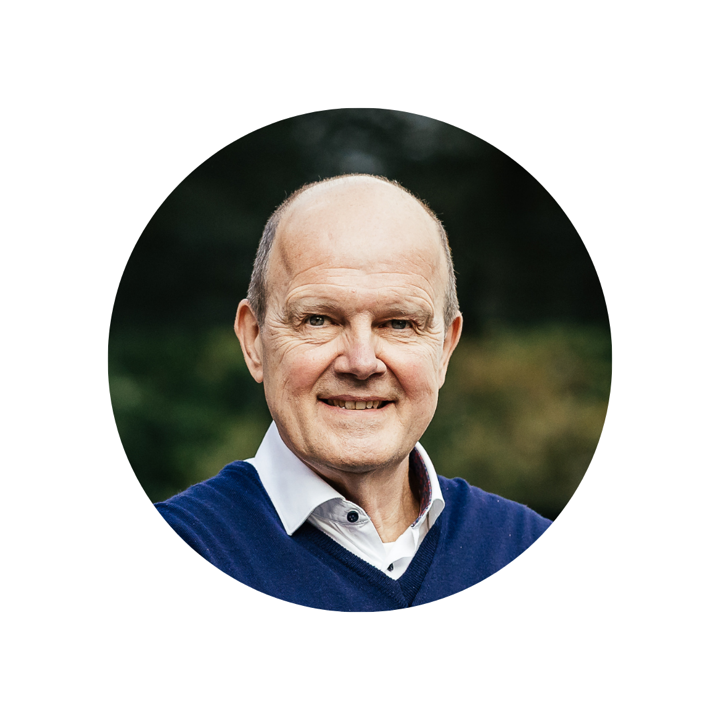
Ancien HR Manager et Master Trainer chez Toyota Motor Europe
Jan Hermans
Jan est master trainer pour les programmes Toyota Global Content, dont PDCA, Performance Management, A3 Consensus Building & Communication et Problem Solving. Il a été spécialiste Management & Leadership Development chez Toyota Motor Europe et apporte cette expérience Toyota directement dans les formations.
Certification
Les les participants will receive a certificate of attendance
Pratique et subsides
Reductions
Organisations registering multiple les participants for the same formations sessions on the same dates benefit from the following reductions:
Second participant: 5%
Third participant: 10%
Fourth and subsequent les participants: 15%
Subsides
Pour les les participants de Flandre (Belgique):
Cette formation est reconnue par le gouvernement flamand pour KMO Portefeuille.
KMO Portefeuille Registration Number Van Goubergen P&M : DV.O100454 (‘Personeelsmanagement’)
Number of Training Hours : 6 Hours – Maximum subsidy amount : 675 euro
Cliquez ici pour plus d'informations
Pour les les participants de l'industrie alimentaire (Belgique):
Cette formation is also supported by Alimento/IPV for organisations in food industry in Belgique.
Veuillez indiquer sur le formulaire d'inscription les subsides demandes.
Boissons et repas
Cold and hot drinks are included in the formation fee.
A light meal is served around 16:45.
Sessions typically run from 13:30 to 20:30, unless otherwise stated.
Lieu
The formation takes place at Roosenberg, Patotterijstraat 1, 9250 Waasmunster, where free parking is available, unless otherwise stated.
Optionnel
Optionnel coaching
Choose one of the following coaching packages:
- 4 × 30-minute coaching sessions — €430 excl. VAT
- 4 × 1-hour coaching sessions — €960 excl. VAT
- 2 × 4-hour coaching sessions — €1,800 excl. VAT
Coaching format and timing are agreed with you and can be planned during or after the formation. Please select your preferred package on the registration form.
TBP is a highly practical approach that enhances your problem-solving skills, enabling you to drive improvements within your organisation effectively.
Contact
Vous avez une question sur cette formation ou vous souhaitez savoir quel parcours vous convient le mieux ? Contactez Lean Academy.
Vous recherchez une formation intra-entreprise ? Écrivez-nous à academy@vangoubergen.com et nous vous recontacterons.